#JS_HEADER##CSS# #IE8PROXYASSETLOADSCRIPTS#

#name#

#SAVE_HEART_NAV_ICON#
#MOBILE-CONTACT-ROW-SEARCH#

Blog

All Morrison Culture Morrison, TN Ford Dealer Reddick Brown Ford Ford SUVs Ford Trucks TN Culture Ford Cars Morrison, TN Ford Service Morrison Travel Tips & Tricks Morrison, TN Used Cars Good Eats Reddick Brown Ford Service Ford Dealership Morrison, TN 2026 Bronco® vs Bronco Sport® B&O® 10-speaker audio system Large 13.2-inch touchscreen

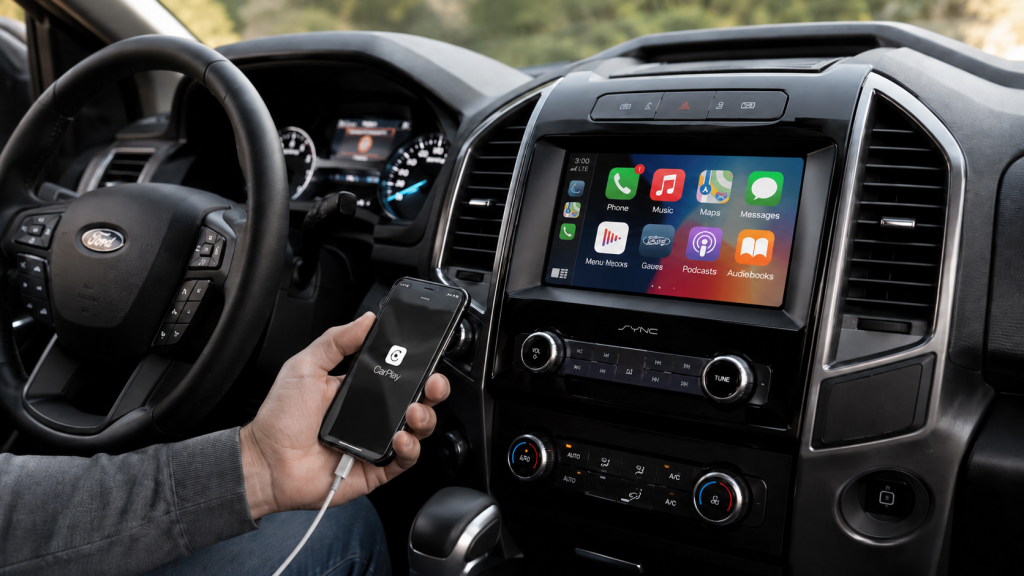
How to Connect Ford SYNC: Apple CarPlay Setup Guide

How to connect Ford SYNC starts with knowing which phone connection your Ford supports. Additionally, Bluetooth handles calls and audio without placing phone apps on the touchscreen. By contrast, Apple CarPlay brings supported iPhone apps onto the Ford display. Android Auto does the same for supported Android apps. Therefore, the first step is choosing the correct connection. Furthermore, your Ford may use SYNC 3, SYNC 4, or SYNC 4A. Therefore, each version uses different menus and phone pairing steps. Newer versions may support wireless phone projection. SYNC 3 usually uses a USB cable for Apple CarPlay or Android Auto. This walkthrough explains each path in clear order. It also covers music, maps, calls, messages, and common connection trouble. Murfreesboro owners can use these steps before contacting the dealership for added support. Which Ford Phone Connection Should You Choose? Bluetooth pairing links your phone with the Ford screen for calls and audio. It does not always open Apple CarPlay or Android Auto. Those phone projection tools require separate setup steps. So, do you need Bluetooth, Apple CarPlay, or Android Auto? Start with the task you want to complete. Bluetooth works well for calls and streamed music. Apple CarPlay brings supported iPhone apps onto the Ford display. Android Auto brings supported Android apps onto that display. more In addition, phone projection gives you access to supported maps, messages, podcasts, and voice controls. It may use a cable or wireless connection. Your Ford screen and phone model control which path appears. Before starting, place the vehicle in Park. Turn on the Ford screen and unlock your phone. Then, switch on Bluetooth. For wireless projection, also switch on Wi Fi. Still, basic Bluetooth pairing may be enough for some owners. It gives access to calls and audio without opening a new screen layout. Phone projection offers a fuller app view through the Ford display. Find Your Ford SYNC Version Your SYNC version controls the menu names and connection path. Therefore, finding the version first prevents wasted steps. SYNC 3 uses a wide touchscreen with a lower menu bar. The menu usually includes Audio, Phone, Navigation, Apps, and Settings. Apple CarPlay and Android Auto usually start through a USB cable. SYNC 4 and SYNC 4A use newer screen layouts. These versions may support wireless Apple CarPlay and Android Auto. Some vehicles also support wired connections through a USB port. You can check the Settings menu for a SYNC information screen. Additionally, the vehicle owner manual may name the installed version. In addition, Ford support resources can match instructions with your model and model year. Why does the version matter? A SYNC 3 owner may search for a wireless menu that never appears. A SYNC 4 owner may connect without keeping the phone plugged in. Clear version matching keeps the process simple. Connect an iPhone Through Apple CarPlay Apple CarPlay places supported iPhone apps on the Ford touchscreen. It supports maps, calls, messages, music, podcasts, and Siri voice control. First, make sure Siri is active on the iPhone. Then, unlock the phone before beginning. Use an Apple approved cable for wired setup. Connect the cable directly to the vehicle USB port. Next, watch the Ford screen for an Apple CarPlay prompt. Accept the terms on both screens. The CarPlay layout should then replace the standard phone screen. For wireless setup, start with Bluetooth and Wi Fi turned on. Open the Ford phone menu and add a new device. Select the vehicle name on the iPhone. Confirm the matching code on both screens. After Bluetooth pairing, the Ford screen may ask about wireless Apple CarPlay. Accept that prompt to open the CarPlay layout. The iPhone may also request access to contacts, messages, or notifications. What should you check when CarPlay does not open? Start with the USB cable and port. Then, confirm Siri, Bluetooth, Wi Fi, and CarPlay permissions. Also check whether another saved phone connects first. Once connected, open Maps, Phone, Messages, Music, or Podcasts from the Ford screen. Siri can handle many tasks through voice commands. Keep attention on the road and use voice control when possible. Connect an Android Phone Through Android Auto Android Auto places supported Android apps on the Ford touchscreen. It supports navigation, calls, messages, music, podcasts, and Google Assistant. Start by unlocking the phone. Turn on Bluetooth. For wired setup, connect a reliable USB cable to the correct vehicle port. A charging only cable may not transfer app data. Then, accept the prompts on the phone and Ford screen. The phone may request access to contacts, messages, location, and notifications. Those permissions support calling, messaging, maps, and voice commands. For wireless setup, keep Bluetooth and Wi Fi turned on. Add the phone through the Ford phone menu. Confirm the matching code. Then, approve the Android Auto prompt on both screens. Android Auto may open without a separate app icon on newer phones. The feature is part of the phone software on many Android versions. Therefore, use phone settings to review permissions and connection history. If Android Auto stays hidden, disconnect the cable and restart both devices. Then, test another data cable. Also remove old vehicle records from the phone. Remove old phone records from the Ford screen as well. After connection, open Google Maps, Phone, Messages, or supported audio apps. Google Assistant can handle many requests through voice commands. Keep the phone stored securely while driving. Why Will Your Phone Not Connect to Ford SYNC? Connection trouble means one part of the pairing path is blocked. The cause may involve settings, permissions, cables, saved devices, or software. Begin with the simplest checks. Make sure the phone is unlocked. Confirm Bluetooth is on. Wireless projection also needs Wi Fi. Wired projection needs a data cable and working USB port. Use this order before resetting the Ford screen: Confirm the phone has current software, then restart the phone and vehicle. Test another data cable and another supported USB port. Delete saved pairings on both devices, then complete a fresh connection. Furthermore, check whether another phone connects first. Ford screens may favor a saved primary phone. Turn off Bluetooth on that device during testing. If music works but CarPlay does not, basic Bluetooth pairing is active. The projection setup still needs approval. Review CarPlay settings on the iPhone and phone list on the Ford screen. If calls work but Android Auto does not, review USB data access and phone permissions. Also check for a damaged cable. A cable can charge the phone while failing to transfer app data. When the connection drops during a drive, move the phone away from loose cables or blocked storage areas. Then, review battery saving settings. Some phone settings may stop wireless projection after the screen locks. Use Music, Maps, Calls, and Messages After Pairing A completed connection should support the phone tasks you selected during setup. Still, each task may require separate permission. For music, choose Bluetooth Audio, Apple CarPlay, or Android Auto from the Ford audio menu. Open the preferred audio app. Then, use the touchscreen, steering wheel controls, or voice control. For maps, open Apple Maps, Google Maps, or another supported navigation app. Enter the destination before driving when possible. Voice control can handle route changes without reaching for the phone. For calls, allow contact access during pairing. That permission lets the Ford screen show names and recent calls. Voice control can place a call through Siri or Google Assistant. For messages, approve notification and message access on the phone. The Ford screen may read supported messages aloud. Voice control can prepare a reply for review. In addition, check these permissions after a phone update. Updates may change privacy settings or remove prior approval. Reconnect the phone after reviewing those settings. Ford technology should make common tasks easier to reach. A clear setup order keeps phone pairing from becoming frustrating. Reddick Brown Ford can also assist Murfreesboro owners with model specific connection questions.

Ford SUV for Daily Driving: Matching Rugged to Real Life

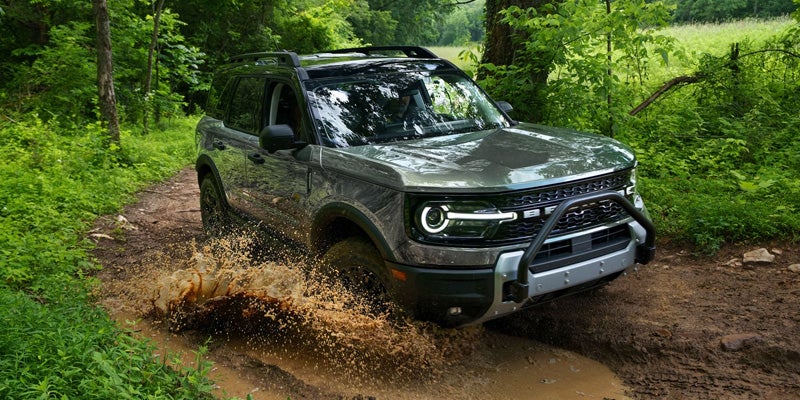
Choosing a Ford SUV for daily driving becomes easier once you understand what separates trail-built capability from everyday comfort, and where the two actually overlap. Many shoppers arrive at the lot drawn by the bold styling of the Bronco or the rugged stance of the Bronco Sport, and they leave questioning whether that capability comes at the cost of a smooth commute or practical family space. The Ford lineup answers that question differently depending on which model you sit behind. However, matching the right SUV to your real routine means looking past the exterior and understanding what the hardware actually does when you are driving Tennessee highways, rural two-lanes, or the occasional gravel trail. The Explorer, Bronco, Bronco Sport, and Expedition each serve a different kind of driver, and knowing the structural and functional differences helps you choose with confidence rather than compromise. What Rugged Capability Means Across the Ford SUV Lineup Rugged is not a single measurement. Across Ford's SUV family, capability spans a wide range from purpose-built off-road architecture to trail-styled daily drivers to family platforms with available off-road packages. Understanding where each model sits on that spectrum is the first step in deciding whether rugged capability is something you will use, something you want available occasionally, or simply a design preference that does not need to drive your purchase decision. The Ford Bronco sits at the most committed end of the range. Its body-on-frame construction, solid front axle on select trims, locking differentials, and G.O.A.T. mode system are purpose-built for demanding terrain. G.O.A.T. stands for Goes Over Any Type of Terrain, and the seven selectable drive modes adjust throttle response, traction control thresholds, and differential behavior for conditions ranging from sand to rock to mud. Trail Control is Ford's low-speed off-road cruise control, holding a set speed over rough ground so the driver can focus on steering input rather than throttle modulation. These are genuine mechanical systems, not appearance packages, and they reflect the engineering priorities of a vehicle designed first for the trail. That engineering orientation also shapes how the Bronco behaves every other day of the week. The Bronco Sport occupies a different position. Built on a unibody platform shared with the Escape, the Bronco Sport carries rugged exterior styling and genuine off-road credibility, but its architecture prioritizes everyday driving composure. The available off-road-tuned suspension, Mud and Ruts mode, and trail-specific traction management give it real trail usefulness beyond what most crossovers offer. Furthermore, the Big Bend, Outer Banks, Badlands, and Wildtrak trims each move the capability needle differently, letting you select how much hardware you actually need. The following overview maps where each Ford SUV lands across the capability spectrum: more Ford Bronco: body-on-frame construction with locking differentials, Trail Control, and G.O.A.T. modes tuned for committed off-road driving. It is the most capable daily driver in the lineup, though its trail-first architecture shapes its on-road personality. Ford Bronco Sport: unibody platform with available Badlands off-road suspension and terrain-specific drive modes. It is genuinely capable on light to moderate trails while delivering noticeably smoother pavement manners than the full Bronco. Ford Explorer Tremor: a family-oriented midsize platform with a factory suspension lift, all-terrain tires, a limited-slip rear differential, and trail-ready hardware. It is designed for shoppers who want real capability without leaving the family SUV footprint. How Platform Architecture Shapes Every Drive The single most consequential technical difference between the Bronco and the rest of the Ford SUV family is the platform beneath the body. That structural choice ripples through fuel economy, ride quality, highway composure, and noise levels in ways that matter every day, not just on trail days. Body-on-frame construction, which the Bronco uses, separates the body from the chassis through a rigid mounting system. This design excels at handling the lateral and vertical stress of off-road terrain, protects drivetrain components, and gives the Bronco a higher towing and payload tolerance relative to its size. On pavement, however, body-on-frame vehicles tend to transmit more road vibration and noise into the cabin, require more driver engagement at highway speeds, and return lower fuel economy figures because the heavier structure carries more curb weight. The Bronco's 2.3-liter EcoBoost base engine returns EPA estimates in the mid-20s combined. For someone commuting 30 to 40 miles daily on US-70 or TN-55, that translates to a real fuel cost difference over the ownership period. The Explorer, Bronco Sport, and Escape all use unibody construction, where the body and frame are integrated into a single structural unit. This approach reduces weight, lowers the vehicle's center of gravity, and smooths how road inputs travel through the suspension into the cabin. The result is noticeably quieter highway cruising, less steering correction needed at speed, and better fuel returns. The Explorer's 2.3-liter EcoBoost achieves up to 28 miles per gallon on the highway. The Bronco Sport's lighter footprint brings the base 1.5-liter EcoBoost up to a similar highway figure. For a driver who primarily navigates Morrison's surrounding two-lanes, runs errands in McMinnville, or commutes toward Sparta, that composure difference is felt on every trip. The available BlueCruise hands-free highway driving system on select Explorer trims adds another layer of long-road ease that the Bronco does not offer. None of this makes the body-on-frame Bronco a poor daily driver. It is far more composed on pavement than its off-road capability might suggest. However, the difference is real, and shoppers who prioritize quiet cabins, refined highway feel, and fuel efficiency will find the unibody alternatives more naturally suited to the majority of their driving. Seating and Cargo Structure Matched to How Your Household Actually Moves Seat count and cargo volume on a spec sheet are starting points, not conclusions. The way those numbers translate to real family loading, including car seats, strollers, sports equipment, groceries, and camping gear, depends on the configuration architecture, how rows fold, and what the second and third rows actually deliver for adult passengers rather than just seat count totals. The Ford Explorer 's three-row, seven-passenger architecture is the most broadly practical for growing families. Second-row width comfortably fits two car seats side by side, and third-row access uses a walk-in entry through the second row that is easier to manage than some competitors. Behind the third row, 16.3 cubic feet of cargo space handles a moderate grocery run or a couple of overnight bags. Fold the third row flat and that expands to 46 cubic feet, which is genuinely useful for sports equipment or weekend hauls. With both rows folded, 85.8 cubic feet opens the Explorer to cargo tasks well beyond what most families expect from a midsize SUV. The 2026 Tremor trim adds a sport-utility dimension to that family footprint through a factory suspension lift, all-terrain tires, and additional ground clearance, letting a family that also wants trail access find it in a single vehicle. The Ford Expedition scales that concept for larger households. Seating for up to eight across three rows, 20.9 cubic feet behind the third row, and a maximum 104.6 cubic feet with all rows folded covers the largest cargo demands in Ford's lineup. The Expedition Max extends the wheelbase for even greater third-row headroom and rear cargo volume, which is a meaningful choice for families whose camping trips or road trips require hauling volume that would otherwise mean pulling a trailer. Moreover, the Expedition's towing capacity reaches 9,600 pounds, which covers boats, camper trailers, and cargo setups common across Middle Tennessee's outdoor recreation culture. The Bronco Sport, by contrast, fits two rows and five passengers across a significantly shorter footprint. Its cargo area emphasizes smart storage over raw volume, with features like a hands-free tailgate, underfloor bins, and load-in hooks that make it practical for active-lifestyle gear without the size of a three-row platform. Ford Explorer cargo configuration: 16.3 cubic feet behind the third row, 46 cubic feet with the third row folded, and 85.8 cubic feet with both rows flat. This structure works well for families who need to switch between passenger and cargo modes regularly throughout the week. Ford Expedition and Expedition Max cargo configuration: up to 104.6 cubic feet of maximum volume with all rows folded, plus class-leading towing capacity up to 9,600 pounds. This suits families whose hauling needs go beyond the school-run-and-grocery-store routine. Ford Bronco Sport cargo layout: a two-row, five-passenger footprint with smart active-lifestyle storage solutions. It is practical for smaller households or drivers who want trail-ready versatility in a compact package rather than three-row family capacity. What Capability Looks Like When You Rarely Leave the Pavement One of the most underserved groups in the Ford SUV conversation is the shopper who genuinely wants capability available for the occasional gravel road, the camping trip twice a year, or the unexpected weather event, but whose daily reality is school carpool, highway commuting, and weekend errands. This buyer does not need the full Bronco hardware stack. However, they also do not want to find themselves under-equipped when the moment arrives. The 2026 Ford Explorer Tremor is built precisely for this buyer. On the platform level, it remains the family-first, unibody Explorer that parents already trust for everyday driving. The Tremor package layers factory hardware on top of that foundation: a suspension lift of 0.6 inches adds ground clearance, Goodyear Wrangler Territory all-terrain tires handle mixed surfaces without the rough road noise of extreme off-road rubber, a limited-slip rear differential manages traction on loose or slippery ground, and Trail Turn Assist improves low-speed maneuverability on narrow trails by braking the inside rear wheel into a tighter arc. The result is an Explorer that drives to school every day, seats seven, and still navigates the kind of terrain that Middle Tennessee's back roads and recreation areas occasionally demand, all without requiring the driver to manage a trail-specific vehicle on the way to work. The Bronco Sport Badlands trim serves a similar role for smaller households. Its available off-road suspension, rear hydraulic bump stops for aggressive terrain absorption, and Mud and Ruts drive mode provide more genuine trail hardware than any standard crossover. Because the Bronco Sport's footprint is compact, it also fits comfortably in standard parking structures and neighborhood streets where the full Bronco's width and turning radius can feel like more vehicle than the situation requires. For a driver who values rugged aesthetics and occasional capability without committing to dedicated off-road architecture, the Badlands trim offers a well-calibrated middle ground. Using Trim Logic to Right-Size Your Decision Trim levels across Ford's SUV lineup are not simply ascending lists of features. They reflect different intended use profiles. Understanding the hardware logic behind each tier helps you avoid paying for off-road capability you will not use, or conversely, under-speccing when you genuinely want it available. On the Bronco Sport, the Big Bend and Outer Banks trims address shoppers who want the rugged exterior and capable all-wheel drive system for occasional unpaved roads and light weather variety. The Badlands trim introduces serious off-road hardware, including the advanced 4WD system with Mud and Ruts mode, off-road-tuned suspension, and rear hydraulic bump stops, for shoppers who will genuinely take the vehicle onto graded gravel, forest service roads, or muddy campsite approaches. The Wildtrak sits between them in daily comfort orientation while adding exterior trail utility. A shopper who identifies capability as occasional and weather-event-driven will find Outer Banks the more balanced choice, while a shopper whose weekends regularly involve trails should start at Badlands. On the Explorer, the XLT and ST-Line trims address the core family SUV buyer focused on space, tech, and comfort. The ST trim's turbocharged 3.0-liter V6 producing 400 horsepower serves driving-experience-focused buyers who do not need off-road hardware but want power headroom on highway passes and merges. The 2026 Tremor trim serves the family buyer who also needs genuine capability without a separate vehicle. Trim selection here is also a question of technology priorities: BlueCruise, available on Platinum and ST trims, becomes meaningful for shoppers who log significant highway miles toward McMinnville or regularly drive the I-24 corridor. Furthermore, selecting the right trim for actual use avoids the common pattern of paying for Wildtrak or Badlands hardware on a Bronco Sport primarily used for school pickup and grocery runs, or over-speccing into Explorer ST horsepower when Tremor capability is the actual need. Every trim decision comes back to one honest question: what does your driving week actually look like? The Ford lineup at Reddick Brown Ford in Morrison is broad enough that the answer to that question has a clear match, without over-reaching into capability you will not use or under-speccing into comfort that leaves you short when it matters.

Ford Trucks for Drivers Who Like VelociRaptor, Shelby, and Baja-Style Capability

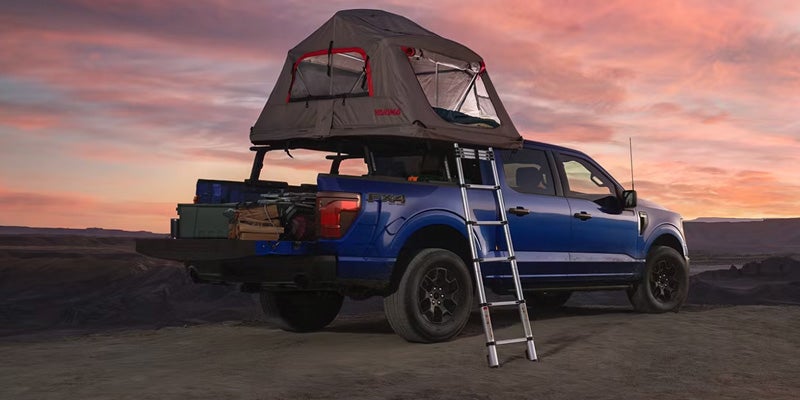
Searches for trucks like VelociRaptor, Shelby F-150, and Baja-style builds usually start with a specific feeling. Drivers want something that feels powerful, planted, and capable of handling more than a typical drive. What often gets overlooked is that those trucks are designed for extreme use cases. High-speed off-road driving, maximum output tuning, or heavily modified setups that are not always practical for daily use. Most drivers are not actually looking for extremes. They are looking for usable power, controlled suspension, and a truck that feels confident in a wide range of conditions. That is where the current Ford truck lineup delivers. Why Performance Trucks Appeal to So Many Drivers Many shoppers searching VelociRaptor or Shelby trucks are really asking what makes those trucks feel different. They are drawn to more • Strong and immediate acceleration when merging or passing • Suspension systems that absorb rough roads without losing control • A wider stance and tire setup that improves stability • A design that reflects strength and capability These qualities come from core engineering, not just aftermarket modification. Ford builds these characteristics into its trucks in a way that supports real-world driving instead of limiting them to extreme scenarios. How That Performance Feel Translates to Real Ford Truck Options Drivers searching for high-performance trucks are usually trying to match a specific type of capability. The difference is that Ford offers those capabilities through trims and packages designed for everyday use. Here is how that interest translates into Ford trucks available today Trim or Package Key Features Best For F-150 XLT Sport Appearance Dark grille, 20-inch wheels, sport seating surfaces Drivers who want a stronger visual presence without sacrificing daily comfort F-150 LARIAT with FX4 Off-Road Package Off-road tuned shocks, skid plates, electronic locking rear differential Drivers balancing job site demands with trail capability F-150 Tremor 33-inch all-terrain tires, Trail Control, lifted suspension tuning Drivers who want dedicated off-road capability with factory engineering F-150 Platinum PowerBoost hybrid system, upgraded interior materials, advanced driver assist features Drivers who want power, refinement, and long-distance comfort The appeal of performance trucks is not limited to specialty builds. It already exists in trucks designed to handle real driving conditions with more consistency and control. How Off-Road Capability Actually Works in Ford Trucks Many drivers ask what makes a truck feel capable off-road. Off-road capability is created through how the truck manages terrain, not just how much power it produces. The Ford F-150 Tremor and FX4-equipped models are designed to maintain control and traction in changing conditions. Key systems that make this possible include • Suspension travel that allows the wheels to move up and down independently, keeping tires in contact with uneven surfaces • Off-road tuned shocks that absorb impact and reduce bounce over rough terrain • Locking rear differential that distributes power evenly to both rear wheels when traction is limited • Terrain Management System that adjusts throttle, shifting, and traction control based on surface conditions The result is a truck that stays stable and predictable instead of reacting harshly to terrain changes. For drivers, that translates into confidence when driving on gravel roads, mud, or uneven job sites. How Ford Super Duty Trucks Deliver Real Strength Some drivers drawn to high-performance trucks are also trying to understand how that capability translates into real work. The Ford F-250 and Ford F-350 are engineered to manage weight and maintain stability under load. Their suspension systems are designed to support towing and hauling without excessive body movement, which improves control and driver confidence. Trims like the Ford F-250 XLT and LARIAT balance durability with everyday usability. Higher trims such as King Ranch and Platinum add interior refinement and driver assistance features that improve comfort during longer drives. This type of capability is often more relevant to everyday use than extreme performance builds. How Ranger and Maverick Fit Into Capability Not every driver needs a full-size or heavy-duty truck to get the capability they are looking for. The Ford Ranger offers a more compact platform with strong torque delivery and off-road readiness. It allows drivers to handle rough terrain while maintaining easier maneuverability in tighter spaces. The Ford Maverick focuses on efficiency and practical utility. It is designed for drivers who need a truck for light hauling, home projects, or daily commuting. Both models show that capability is not defined by size alone. It is defined by how well the truck supports your routine. Cost and Ownership Differences That Matter Over Time Many drivers comparing trucks like VelociRaptor or Shelby builds eventually ask what ownership actually looks like over time. The biggest difference most shoppers feel is financial, both upfront and long term. Factor VelociRaptor Style Build Factory Ford Truck Option Purchase Price Often $120,000 to $200,000 Typically $50,000 to $80,000 depending on trim Fuel Economy Often under 10 mpg due to tuning and weight Typically 15 to 20 plus mpg depending on engine and setup Insurance Higher premiums tied to modifications and value Standard rates based on production models Parts and Service Requires specialized shops or tuner support Serviceable through Ford-certified service centers Modified trucks often prioritize peak output and customization. Factory Ford trucks are engineered to balance power, efficiency, and long-term reliability. Choosing the Right Ford Truck Based on How You Drive Most shoppers searching high-performance trucks are trying to avoid choosing something that does not fit their needs. When comparing options, it helps to evaluate how the truck will be used most often • Daily driving and commuting → Ford F-150 XLT or LARIAT • Off-road capability with everyday usability → Ford F-150 Tremor • Towing, hauling, or heavy-duty work → Ford F-250 or F-350 • Smaller size with practical capability → Ford Ranger or Ford Maverick This approach shifts the decision away from labels and toward how the truck actually fits your lifestyle. What to Focus on Instead of Performance Labels Instead of focusing on names like VelociRaptor or Shelby, it is more useful to evaluate how a truck performs in real situations. Look at how the suspension responds to rough roads. How the truck delivers power when needed. How stable it feels under load. How comfortable it is during daily driving. When you choose based on how you actually drive, you end up with a truck that delivers capability you can rely on every day.

Ford Truck vs SUV: Which Fits Your Lifestyle?

Choosing between a Ford truck and a Ford SUV often sounds simple until shoppers start comparing what they actually need from the vehicle each day. Some drivers want towing strength, bed utility, and higher payload capability. Others need protected cargo space, flexible seating, and easier family use. The real decision is less about body style and more about how the vehicle’s design supports your routine. A Ford truck and a Ford SUV solve different ownership problems, and understanding how their systems work can make the choice much clearer. For many shoppers, the best fit comes down to cargo type, towing frequency, weather conditions, passenger needs, and how much daily driving matters compared with weekend capability. How Ford Truck Payload and Ford SUV Cargo Space Solve Different Problems Many shoppers comparing a Ford truck vs SUV want to know whether payload and bed access matter more than enclosed cargo space. The answer starts with understanding what each layout is designed to carry. Payload is the total weight a vehicle can carry, including passengers, gear, and anything loaded into the bed or cabin. A Ford Maverick payload capacity, Ford Ranger payload capacity, or Ford F-150 payload setup is built around carrying heavy or messy items that may not fit well inside an enclosed cabin. That matters for drivers hauling mulch, lumber, tools, motorcycles, or landscaping equipment. more A Ford SUV cargo space layout works differently. Models such as the Ford Explorer cargo area, Ford Expedition cargo space, and Ford Bronco Sport cargo area are designed to store gear inside the vehicle. That protects luggage, groceries, sports equipment, and weather-sensitive items from rain, theft, and road dirt. Shoppers deciding between these two layouts should think about what they carry most often: Open bed utility is better for dirty, oversized, or irregular cargo Enclosed SUV storage is better for family gear, shopping, pets, and travel bags A Ford truck bed is easier to load bulky items into A Ford SUV cabin is often easier to secure and organize for daily errands This is one of the biggest reasons a Ford truck vs SUV decision should be based on ownership habits, not just styling preference. When Ford Truck Towing Capability Matters More Than Ford SUV Flexibility Drivers also ask whether a Ford truck or Ford SUV is the better towing choice for campers, boats, and utility trailers. The answer depends on how often you tow and what else the vehicle needs to do. A Ford F-150 towing setup or Ford Ranger towing capacity is built around repeated trailer work. Trucks are engineered with towing as a primary use case, which affects chassis strength, suspension tuning, bed utility, and available towing technology. If towing is part of your work routine or a frequent recreational need, a truck usually gives you a better overall ownership fit. A Ford Explorer towing capacity or Ford Expedition towing capacity can still be a strong match for drivers who tow occasionally but need seating, interior comfort, and family flexibility the rest of the time. This is where many shoppers get stuck. A Ford SUV may tow enough for a smaller camper or boat while still offering an enclosed cabin, easier passenger access, and more comfortable long-distance family travel. What shoppers should evaluate here includes: How often the trailer will actually be used Whether the vehicle also needs to carry several passengers regularly Whether cargo is better stored in a truck bed or behind enclosed seats Whether towing is occasional convenience or a repeated workload A truck is often the smarter fit when towing is central to the lifestyle. An SUV is often the smarter fit when towing is only one part of a broader family-use pattern. How Ford AWD, 4WD, and Drive Modes Change the Decision Another common question is whether Ford AWD or Ford 4WD makes more sense for snow, dirt roads, and weekend travel. This is an important difference because these systems are designed for different kinds of traction demands. All wheel drive is a traction system that can distribute power to multiple wheels to improve grip when road conditions become slippery. In many Ford SUVs, AWD is designed to improve confidence in rain, light snow, and mixed pavement conditions. That makes a Ford Explorer AWD system or Ford Bronco Sport traction system attractive for commuters and families who want added stability without moving into a more specialized truck setup. A more truck-oriented Ford 4WD system is typically better aligned with towing, loose surfaces, work sites, and more demanding off-road conditions. A Ford Ranger drive mode system or Ford F-150 4WD setup is useful when the vehicle needs to handle mud, deeper snow, rocky terrain, or trailer-related traction demands. This part of the decision matters because lifestyle use is rarely identical. A driver dealing mostly with pavement, weather changes, and family travel may benefit more from a Ford SUV traction setup. A driver who regularly pulls equipment onto job sites or travels over rougher surfaces may need a Ford truck traction system instead. Why Daily Driving Habits Often Decide Ford Truck vs SUV Ownership Shoppers undecided between a Ford Maverick, Ford Ranger, Ford Explorer, or Ford Expedition often focus first on capability numbers. In real ownership, daily driving behavior usually has just as much influence on satisfaction. Vehicle size changes parking effort, visibility, turning behavior, and how easy the vehicle feels in traffic. A Ford SUV often makes more sense for drivers dealing with school pickup lines, parking garages, city streets, and frequent passenger use. Interior access is simpler, cargo is protected, and the driving experience may feel easier to manage if heavy hauling is not part of the routine. A Ford truck makes more sense when daily life includes materials, equipment, dirty gear, or repeated trailer use. Even when a truck is larger, the bed design may save time and reduce frustration for owners who constantly load and unload bulky items. This is why the best question is not whether trucks are more capable or SUVs are more comfortable. The better question is which design removes the most friction from your actual week. How the Ford Maverick Blurs the Line Between Truck Utility and SUV Practicality The Ford Maverick has made this comparison more interesting because it does not fit the old assumption that trucks are always large and inefficient. Many shoppers researching Ford Maverick towing capacity and Ford Maverick payload capacity are really asking whether a compact truck can offer enough utility without the everyday tradeoffs of a full-size pickup. That is where the Maverick changes the conversation. It offers bed access and useful truck capability in a size that may feel easier to live with for daily commuting. For shoppers who want occasional hauling ability, lighter towing, and more manageable dimensions, the Maverick can serve as a middle ground between a traditional truck and a family SUV. This matters for buyers who need: Better utility than a typical enclosed cargo area Easier daily driving than a larger pickup Flexible capability for home projects and outdoor hobbies A practical vehicle that does not force a full-size truck commitment Which Ford Fits Your Lifestyle Best The right answer in a Ford truck vs SUV comparison depends on what the vehicle needs to do most often. A Ford truck is usually the better fit when payload, bed access, repeated towing, and heavy-duty utility define ownership. A Ford SUV is usually the better fit when passenger comfort, enclosed cargo space, daily drivability, and family flexibility matter more. For some shoppers, the answer is clearly a Ford F-150, Ford Ranger, or Ford Maverick. For others, a Ford Explorer, Ford Expedition, or Ford Bronco Sport will better support everyday life. The best choice comes from matching the vehicle’s engineering strengths to the way you actually drive, carry, tow, and travel.

Best Ford SUVs for Growing Families Space Safety and Everyday Usability

Choosing the right SUV for a growing family is less about peak horsepower or exterior styling and more about how the vehicle supports daily life. Interior space needs change quickly as families grow. Safety expectations increase. Cargo demands become less predictable. Ford’s SUV lineup is structured to meet these evolving needs by offering multiple sizes, seating layouts, and safety systems rather than a one size fits all approach. Understanding which Ford SUV works best depends on how family size, driving habits, and long term ownership expectations intersect. What Families Should Evaluate First When Comparing SUVs Before comparing individual models, it helps to understand what actually matters in family focused ownership. Key evaluation factors include: more Seating flexibility and ease of access Car seat compatibility and door swing clearance Cargo space with seats in use Advanced safety and driver assistance systems Ride comfort and road stability Long term reliability and ownership confidence Ford engineers its SUV lineup so that each model targets a different family use case rather than simply scaling size upward. Ford Escape Practical for Young and Growing Families The Ford Escape is often overlooked in family discussions, but it serves an important role for smaller or early stage families. Why the Escape works well: Compact exterior footprint that is easy to park and maneuver Rear seating that accommodates child seats without excessive bulk Flat load floor for strollers and groceries Strong fuel efficiency for daily commuting and school runs The Escape is best suited for families with one or two children who prioritize drivability and efficiency over maximum interior volume. Ford Edge Balanced Space Without Third Row Complexity The Ford Edge occupies the middle ground between compact and three row SUVs. It is designed for families that want more space than a compact SUV but do not need a third row. Family advantages of the Edge include: Wide rear seat that easily accommodates multiple child seats Large cargo area without folding seats Stable ride quality for longer trips Strong structural safety design For families that carry sports equipment, pets, or travel gear but rarely transport more than five passengers, the Edge offers a simpler and more usable layout than larger SUVs. Ford Explorer The Core Family SUV Option The Ford Explorer is often the default choice for growing families because it balances seating capacity with everyday usability. Key family focused strengths: Available third row seating for expanding households Multiple powertrain options to support highway driving and towing Advanced driver assistance features that support long distance travel Configurable interior layouts that adapt to passengers or cargo The Explorer is particularly well suited for families who anticipate growth or regularly transport extended family members, teammates, or friends. Ford Expedition Maximum Space for Large Families For larger families or those with demanding space needs, the Ford Expedition provides full size SUV capability. Why the Expedition stands out: Adult usable third row seating Significant cargo capacity even with all rows in use Strong body on frame stability for highway confidence Power and cooling systems designed for heavy loads This SUV is ideal for families who prioritize space and long trip comfort over fuel efficiency or compact size. Safety Systems That Matter for Families Ford equips its SUVs with advanced safety systems designed to reduce collision risk and driver fatigue. Common family focused safety features include: Automatic emergency braking Blind spot monitoring with cross traffic alerts Lane keeping assistance Adaptive cruise control Rear view camera systems with enhanced visibility These systems work together to support situational awareness, particularly during school drop offs, highway travel, and parking lot environments. Cargo Space and Everyday Usability Cargo usability is more important than raw volume numbers. Families need space that works without constant seat folding or rearranging. Practical cargo considerations include: Cargo space with second and third rows occupied Easy liftgate access Flat load floors Interior storage for small items Ford designs interior layouts to support real world use rather than focusing solely on maximum capacity figures. Choosing the Right Ford SUV for Your Family There is no single best Ford SUV for every family. The right choice depends on how the vehicle will be used day to day and how those needs may change over time. Smaller families may benefit from efficiency and maneuverability. Growing families often need seating flexibility. Larger households require consistent space and stability. Ford’s SUV lineup allows families to choose based on practical needs rather than forcing unnecessary size or complexity. Long Term Ownership Perspective Family vehicles are long term investments. Choosing the right SUV means considering how safety systems, interior durability, and usability will hold up over years of ownership. Ford SUVs are engineered with a focus on real world family use, offering a range of options that grow with household needs rather than limiting future flexibility.

Why Ford Trucks Are the Most Trusted in Tennessee

Trust in a truck is not built through marketing claims. It is earned through years of consistent performance under load, in heat, on hills, and across long workdays. In Tennessee, trucks are not weekend accessories. They are tools used for construction, agriculture, hauling equipment, towing trailers, and navigating rural terrain alongside daily driving. Ford trucks have earned trust in this environment because their engineering decisions prioritize durability, system integration, and long term workload reliability. This trust is the result of how Ford builds trucks from the frame up, not just how they look on paper. What Trust Means for Truck Buyers in Tennessee For work focused buyers, trust is not an abstract idea. It is measured in practical outcomes: Engines that maintain output under sustained load Transmissions that manage heat and torque without premature wear Frames that resist flex when towing or hauling Cooling systems that perform in hot, humid conditions Braking systems that remain predictable with heavy trailers Consistent performance over high mileage ownership Ford trucks are designed around these realities rather than peak numbers alone. more Ford Frame and Chassis Engineering The foundation of truck reliability starts with the frame. Ford uses high strength steel frames across its truck lineup, engineered to balance rigidity and controlled flex. Key structural advantages include: Fully boxed frame sections in high stress areas Reinforced crossmembers for towing stability Load optimized frame geometry to reduce fatigue over time Suspension mounting points designed to distribute stress evenly This matters in Tennessee where uneven terrain, job site access roads, and repeated towing cycles place constant stress on the chassis. A rigid but intelligently engineered frame improves durability and preserves alignment and suspension integrity over long term use. Powertrain Design Built for Real Workloads Ford truck engines are engineered around specific duty cycles rather than generalized performance. Key powertrain considerations include: Broad torque curves that deliver usable pulling power at low and mid rpm Engine cooling systems designed to maintain temperature under sustained load Oil and lubrication pathways optimized for towing and hauling conditions Engine options matched to different workload demands Rather than relying on a single engine solution, Ford offers multiple powertrain configurations so buyers can match capability to actual use. This reduces strain, improves longevity, and prevents overworking undersized engines. Transmission Durability Under Load Transmission reliability is a major factor in long term truck trust. Ford truck transmissions are tuned to manage torque delivery smoothly and consistently. Key transmission reliability factors include: Gear spacing designed to reduce hunting while towing Torque converter tuning that limits excessive heat buildup Transmission cooling systems integrated into towing packages Shift logic calibrated for load awareness In hilly Tennessee terrain, these design choices prevent excessive heat and wear during towing and stop and go work driving. Towing Performance Is a System, Not a Number Towing trust is not just about maximum ratings. It is about how the entire vehicle manages the load. Ford towing systems are engineered holistically: Frame strength supports trailer weight and tongue load Axles and differentials are selected for sustained torque demands Cooling systems manage engine and transmission heat under load Brake systems are sized for trailer assisted stopping Stability systems help control sway and directional movement This integrated approach is why Ford trucks maintain stable towing performance in real world conditions rather than only under ideal scenarios. Reliability Comes From Predictable Behavior One reason Ford trucks are trusted by contractors and fleet operators is predictability. A truck that behaves consistently under load reduces driver fatigue and mechanical stress. Predictable systems include: Throttle response tuned for smooth torque delivery Braking systems calibrated for progressive stopping Suspension designed to remain stable under varying payloads Steering systems that maintain feedback while towing These factors are especially important for long workdays and repeated towing cycles common in Tennessee industries. Fleet Use as a Reliability Indicator Fleet adoption is one of the strongest indicators of real world reliability. Fleet buyers prioritize uptime, maintenance predictability, and long service life. Ford trucks are widely adopted in fleet use because: Powertrains are engineered for high mileage durability Maintenance intervals are designed around work use Parts availability and service networks support long term ownership Systems are designed to be serviceable, not just powerful This same engineering benefits individual buyers who rely on their trucks for daily work. Tennessee Specific Driving Demands Tennessee truck use involves unique challenges: Heat and humidity increase cooling system demands Hilly terrain stresses powertrains and brakes Towing equipment and trailers is common Rural roads and job sites require suspension durability Ford truck engineering addresses these demands through cooling capacity, drivetrain strength, and structural design that supports repeated heavy use without rapid degradation. Why Trust Persists Across Generations Trust in Ford trucks continues because the brand consistently prioritizes function over trend. While features evolve, the core engineering focus remains centered on: Long term durability System level integration Work oriented performance Predictable ownership experience This consistency is why Ford trucks remain the most trusted choice for Tennessee drivers who depend on their vehicles for more than transportation. Final Ownership Perspective Ford trucks earn trust by doing what matters every day, not by chasing short term metrics. Their reliability is built through structural integrity, powertrain durability, towing system integration, and predictable performance under real workloads. For Tennessee drivers who demand trucks that show up consistently, handle stress intelligently, and remain dependable over time, Ford’s engineering approach continues to justify its reputation.

Best Ford Trucks for Daily Driving and Towing

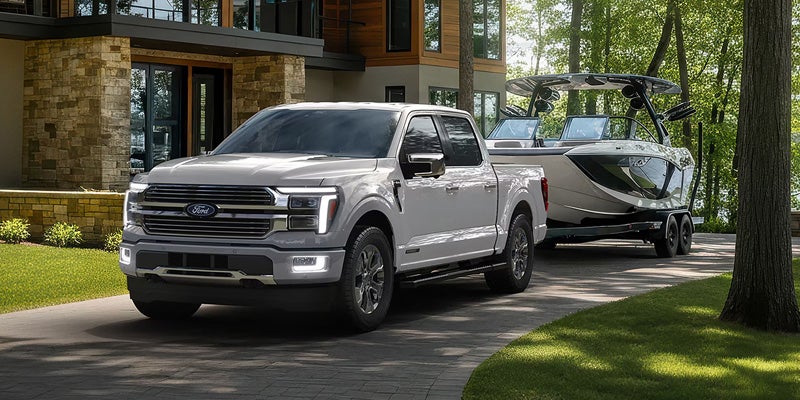
Choosing a truck that works hard without feeling like too much truck day to day is one of the most common challenges buyers face. Ford’s truck lineup is built to solve that exact problem by offering distinct classes that balance comfort, performance, and towing capability based on how you actually drive and work. Whether you are commuting during the week, towing on weekends, or doing both regularly, Ford trucks are engineered to match real usage rather than forcing drivers into a one size fits all solution. Understanding Ford’s Truck Lineup by Use Case Ford structures its truck lineup around capability tiers, not just size. Each class is designed for a specific mix of daily drivability and work performance. The Ford F 150 is the core of the lineup and the most versatile option for drivers who want everyday comfort with serious towing ability. It delivers strong acceleration, stable highway manners, and modern interior technology while still offering impressive towing capacity when properly equipped. Super Duty models like the F 250 and F 350 are purpose built for heavier, more consistent towing and payload demands. These trucks prioritize durability, cooling capacity, and chassis strength, making them ideal for large trailers, jobsite equipment, or frequent hauling that would push a half ton truck beyond its comfort zone. Daily Driving Comfort in a Pickup Truck Modern Ford trucks are engineered to handle daily driving with far more refinement than many people expect. Suspension tuning, cab insulation, and advanced driver assistance features play a major role in how a truck feels during everyday use. The F 150 stands out here thanks to its balance of ride comfort and responsive handling. Its lighter platform compared to heavy duty trucks makes it easier to maneuver in traffic and parking lots, while still offering a confident driving feel on the highway. Super Duty trucks can be driven daily, but their stiffer suspension and larger footprint are best suited for drivers who regularly need their added strength rather than occasional towing. Towing Capacity and Real World Capability One of the most common questions buyers ask is how much towing capacity they actually need. Ford addresses this by offering multiple powertrain and axle configurations within each truck class. The F 150 provides towing capability that covers boats, campers, utility trailers, and recreational equipment with ease. Available towing packages add features like integrated trailer brake controllers, upgraded cooling systems, and hitch assist technology that make towing safer and more controlled. Super Duty trucks are designed for heavier trailers where stability, braking confidence, and long term durability are critical. Their reinforced frames, available diesel engines, and advanced trailering technology make them the right choice for large fifth wheel or gooseneck trailers. Payload vs Towing What Really Matters Many drivers focus only on towing numbers, but payload capacity is just as important. Payload includes passengers, cargo in the bed, and the tongue weight of a trailer. Ford trucks are engineered to balance both. Choosing the right configuration ensures the truck stays within its designed limits, which improves braking performance, handling, and long term reliability. This is one reason Ford offers multiple trims and axle options rather than pushing every buyer into the highest capacity model. Gas vs Diesel Considerations Ford offers both gas and diesel engines across its truck lineup to match different towing styles. Gas engines are well suited for drivers who tow occasionally and want responsive performance for daily driving. Diesel engines excel at sustained towing under heavy loads, delivering strong low end torque and improved efficiency when hauling consistently. Choosing between them depends on how often and how heavy you tow, not just maximum numbers. Choosing the Right Ford Truck for Your Needs The best Ford truck is the one that fits your real driving habits. For many drivers, that means an F 150 configured with the right engine and towing package. For others with heavier demands, a Super Duty provides the confidence and durability needed for serious work. Understanding how you drive, what you tow, and how often you do both is the key to making the right choice. At Reddick Brown Ford, our team helps drivers compare Ford trucks based on real world use, not just specs on paper. Whether you need a truck that handles daily commuting, weekend towing, or demanding workloads, there is a Ford built to meet you where you are. If you want help narrowing down the right Ford truck for your driving and towing needs, reach out to our team and explore your options with confidence.

Interior of a 2025 Ford Bronco Sport SUV featuring gray and black seats with a modern design, surrounded by trees outside.

Exploring the Trim Options of the 2025 Ford Bronco Sport

Are you looking for a compact SUV with strong off-roading capabilities that's also great for everyday driving? The 2025 Ford Bronco Sport is an adventurous, reliable, great-looking vehicle with standard 4x4 and a wealth of safety features. Here are the four trim options to choose from. more The Bronco Sport Big Bend With the base Bronco Sport trim, you enjoy responsive engine power from a 1.5L EcoBoost engine with auto start-stop technology paired with an 8-speed automatic transmission. A variety of features make off-roading a breeze, including a HOSS 1.0 off-road suspension and Terrain Management System with five GOAT Modes ('GOAT' stands for Goes Over Any Terrain). The Big Bend has a tough, athletic appearance, with a safari-style roof and standard roof rack side rails. You also get plenty of driver-friendly tech, such as heated, powered side-view mirrors, intelligent vehicle access with push-button start, a wireless charging pad, and a large 13.2-inch capacitive touchscreen with the SYNC 4 OS, conversational voice command recognition, and wireless smartphone connectivity. Safety-wise, you're extremely well supported, with a robust Ford Co-Pilot360 Assist+ suite of features that includes evasive steering assist, intersection assist, blind zone detection, and much more. The Bronco Sport Heritage The Heritage trim has even better off-roading chops with standard all-terrain tires. The exterior has an attractively Oxford white-painted roof. The wheels, side decals, and front grille are also Oxford white; the grille also has striking red Bronco lettering. Inside the cabin, the Heritage comes with upscale plaid cloth seating and a center console armrest with navy pier micro suede and race red stitching. The Bronco Sport Outer Banks Larger 18-inch ebony-black wheels give the Outer Banks trim a more commanding appearance and superior traction. The Outer Banks also has powerful, eye-catching LED fog lamps and headlamps with LED signature lighting, plus rain-sensing windshield wipers. The interior of the Outer Banks is significantly more refined and tech-savvy. There's an 8-way driver's seat and a 6-way front passenger's seat, both heated with premium trimming and memory settings on the driver's side. The steering wheel is also heated. You have an auto-dimming rearview mirror, a remote start system, a dual-zone automatic climate control system, and a one-year subscription to Ford's advanced Connected Navigation system. The Bronco Sport Badlands The top Badlands trim takes a big step upward in power and off-roading performance, with the extra horsepower of a 2.0L EcoBoost® Engine, advanced 4x4 with a twin-clutch rear drive unit, an upgraded trail-tuned suspension, seven GOAT modes in the Terrain Management System, and Ford Trail Control with one-pedal driving. The Badlands comes with a full-size spare tire and wheel. The cabin is both more luxurious, with leather-trimmed seating, and more rugged and trail-ready. The flooring and seat backs are rubberized, you have zipper pockets on the front seat backs, and a 110V/400W AC power outlet is handy for camping equipment, power tools, and laptops alike. Visit Reddick Brown Ford in Morrison, TN, to take any Bronco Sport for a test drive. This tough, smart, durable SUV was built for the wild.

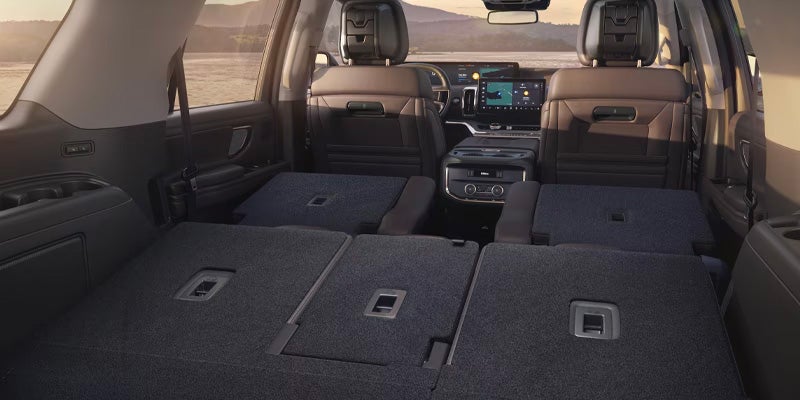
Interior of a 2025 Ford Expedition SUV with rear seats folded flat, showing space for cargo.

4 Impressive Aspects of the 2025 Ford Expedition

Families looking for the next vehicle to take them on a fun expedition need something roomy and practical, and strength is a bonus. The 2025 Ford Expedition meets all of that criteria, and it also has many more impressive features to explore. more 1. Two Roomy Sizes The Expedition is a spacious vehicle that can accommodate up to eight passengers and up to 123.1 cubic feet of cargo. You need a MAX version to fit that amount of cargo into the vehicle, and you have to fold down the second and third rows to use that space. If you only fold down the third row, then you have 84.5 cubic feet of space, and if you don't fold down any of the rows, then you've got a cargo space spanning 37.4 cubic feet. Non-MAX trims also have a lot of room for luggage, with 108.5, 69.9, and 22.9 cubic feet behind the first, second, and third rows, respectively. 2. Towing Prowess You're getting a towing capacity of at least 6,000 pounds no matter what configuration of the Expedition you buy. The 4x2 Expedition lets you tow up to 6,000 pounds, and the 4x2 MAX has a towing capacity of up to 6,300 pounds. Drivers who need more strength than that should consider one of the 4x4 models, as the regular 4x4 Expedition can haul up to 9,600 pounds, and its MAX counterpart has a towing capacity of up to 9,000 pounds. 3. Smart Safety Technology With standard features that include pre-collision assist, reverse brake assist, and blind spot assist, you can feel a little more secure as you drive. These features help you stay aware of potential hazards around the vehicle. Every trim also has a camera that lets you view the whole area around the SUV to check for hazards. 4. Entertainment and Convenience The 13.2-inch infotainment display in every Expedition offers convenience and entertainment in one system. The built-in Wi-Fi hotspot and standard SiriusXM with 360L give your passengers plenty of things to keep them occupied while you're driving. Connecting your smartphone to the system adds convenience, as you can use voice commands to access various smartphone features. You can also alter different vehicle settings hands-free. Get behind the wheel and test drive the Expedition at Reddick Brown Ford in Morrison, TN. Go to our website to schedule your test drive now.

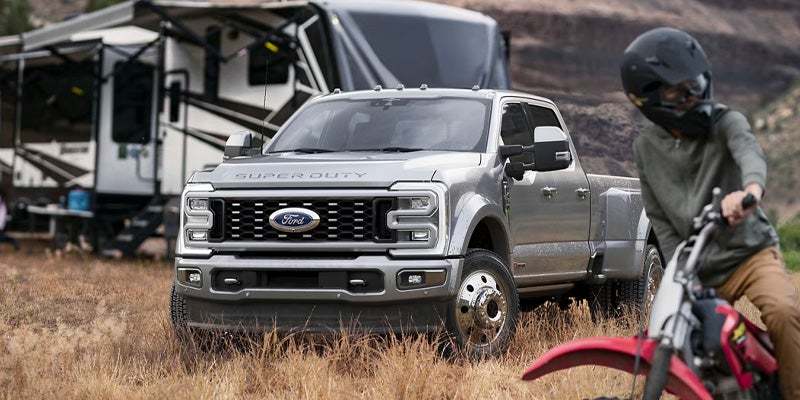
A silver 2025 Ford F-250 Super Duty parked on grass with a camper in the background and a motocross rider nearby.

Breaking Down the Trim Levels of the 2025 Ford F-250 Super Duty

When you need a truck with the strength and capability to tackle heavy-duty tasks, you need the 2025 Ford F-250 Super Duty. This powerful beast is available in five trim configurations, from the no-frills XL to the luxurious Platinum. Read on for the lowdown on the F-250 models. more 1. XL The XL may be the most affordable trim, but it's a very capable truck with a 405-horsepower 6.8-liter V8 at its heart. The rugged exterior is equipped with many premium features, including automatic quad-beam halogen headlights, daytime running lights, trailer tow mirrors, and 17-inch steel wheels. Inside, passengers can relax into the comfortable split-bench seating. Drivers view information on a 4.2-inch instrument panel, and infotainment is provided by an eight-inch touchscreen with 5G Wi-Fi hotspot capability for up to 10 devices. 2. XLT Building on the XL, the XLT gains a chrome grille, chrome bumpers, and 18-inch silver aluminum wheels for a smarter appearance. Drivers now enjoy the comfort of an eight-way power-adjustable seat with two-way power lumbar. 3. Lariat The Lariat moves us into the realm of luxury by introducing more desirable features, such as machined wheels, LED reflector headlights, and LED box lighting. The side towing mirrors become power-adjustable, heated, and feature integrated spotlights. The front ActiveX-lined seats become ventilated, while the rear seats are now heated. Drivers receive a heated steering wheel, a 12-inch instrument panel, and a memory function to save their pedal, mirror, and seat settings. The infotainment system now includes a 12-inch touchscreen with integrated navigation. 4. King Ranch A power boost sees the King Ranch gain a 7.3-liter V8, which ups the output to 430 ponies and 485 pound-feet of torque. A stylish makeover gives this trim two-tone accents on the lower body and Caribou accents on the grille and 20-inch wheels. Power-deployable running boards help everyone climb aboard, and a power tailgate with integrated step improves bed access. Kingsville leather now lines the interior. A head-up display is included as standard, and a sound upgrade introduces a 14-speaker B&O Unleashed audio system. 5. Platinum The Platinum has a more upmarket look, as it swaps the King Ranch's Southwestern touches for an agate black grille and black onyx and blue leather seating surfaces. Ford's top trim also adds LED projector headlights, onboard scales, and a smart hitch. No job is too big for the F-250 SD. If you're ready to find your new workhorse, stop by Reddick Brown Ford in Morrison, TN, and explore the full F-250 range today.

A red Ford truck towing a white and red boat along a secluded road by the water

Top 4 Features of the 2025 Ford F-150 You Need to Know

The F-150 remains America's best-loved truck thanks to its blend of performance, strength, functionality, and cutting-edge tech. We look at some of the standout features of the 2025 Ford F-150. more Top 4 Features of the 2025 Ford F-150 1. Multiple Configurations Tailoring the F-150 to your needs is easy. For 2025, Ford offers eight trim configurations, each with their own unique characteristics and varying levels of comfort, convenience, and capability. Options include the budget-friendly XL, the off-road-enhanced Raptor, and the luxurious King Ranch. Throw in different wheelbase sizes, seating options, and cab styles, and you can create the F-150 that fits your lifestyle, whether you're after a truck for work or play. 2. Six Power Options Ford also offers drivers the choice between six power options. Lower trim levels are fitted with a robust 2.7-liter EcoBoost V6 that kicks out 325 horsepower and 400 pound-feet of torque. Eco-conscious drivers can opt for a 430-horsepower 3.5-liter hybrid V6 to help reduce their carbon footprint. As the most capable model, the Raptor is equipped with a 3.5-liter twin-turbo V6 as standard, which ups the output to 450 ponies and 510 pound-feet of torque. However, if it's power you crave, install the available supercharged 5.2-liter V8 in the Raptor to push the horsepower to 720 ponies and the torque to a mighty 640 pound-feet. 3. Practical Interior Ford has designed the F-150's cabin to be as practical and functional as possible by incorporating a number of innovative features. Flip and Fold seating is installed in the rear, which can be flipped to open up the back section to accommodate extra cargo. When down, the seats hide secret storage compartments, handy for stowing tools and other valuables. If you frequently take your work on the road, consider transforming your truck into a mobile office with the available Interior Work Surface. This ingenious feature allows you to stow the shifter and convert the center console into a flat work surface or laptop table. 4. Pro Access Tailgate To make the F-150's bed as accessible as possible, Ford offers an available Pro Access Tailgate. This versatile gate combines the functionality of a traditional tailgate with the practicality of a swing gate. Swinging the central section of the gate open to 100 degrees places you 19 inches closer to the truck bed. From its outstanding power options to its practical interior, the Ford F-150 delivers on all levels. If you're ready to experience the new F-150, visit Reddick Brown Ford in Morrison, TN, today.

Connecting Your Phone to Ford Sync: A Comprehensive Guide

In today’s connected world, seamlessly integrating your smartphone with your vehicle is no longer a luxury—it’s a necessity. For Ford owners, the Sync system offers a powerful way to stay connected on the road. Let’s dive into the world of Ford Sync, exploring how to connect your phone, the differences between Sync versions, and everything you need to know to make the most of this innovative technology. Image licensed via Wrtiesonic Understanding Ford Sync: From 1 to 4 Ford Sync has evolved significantly over the years, with each version bringing new features and improvements. Let’s take a brief look at the history of Ford Sync: more Sync 1 (2007) The original Sync system introduced basic voice commands and Bluetooth connectivity for phones and media players. Sync 2 (2011) Also known as MyFord Touch, this version brought a touchscreen interface and improved voice recognition. Sync 3 (2015) A significant upgrade with a more responsive touchscreen, improved voice recognition, and support for Apple CarPlay and Android Auto. Sync 4 (2020) The latest version offers larger screens, wireless Apple CarPlay and Android Auto, enhanced voice recognition, and over-the-air updates. What Does Ford Sync Do? Ford Sync is an in-vehicle communications and entertainment system that offers a wide range of features: Phone Integration: Make hands-free calls and access your contacts. Music Streaming: Play music from your phone or connected devices. Navigation: Access maps and turn-by-turn directions (on equipped models). Voice Commands: Control various functions using voice commands. App Integration: Use compatible smartphone apps through the Sync interface. Vehicle Health Reports: Get updates on your vehicle’s maintenance needs. Emergency Assistance: Automatically call emergency services in the event of a crash (where available). How to Check Your Ford Sync Version To check which version of Ford Sync you have: Turn on your vehicle and the Sync system. On the main screen, look for a “Settings” or “Menu” option. Navigate to “System” or “General.” Look for “About” or “System Information.” Here, you should find the Sync version number. Alternatively, you can check your vehicle’s manual or contact your local Ford dealer with your Vehicle Identification Number (VIN). Can You Update Ford Sync for Free? Yes, Ford typically offers Sync updates for free. The update process varies depending on your Sync version: Sync 1 and 2: Updates are usually done via USB drive. You can download the update from Ford’s website and install it yourself. Sync 3: Some updates can be done via USB, while others may require a visit to the dealer. Sync 4: Offers over-the-air updates, making the process much simpler. Your vehicle can download and install updates automatically when connected to Wi-Fi. To check for available updates, visit the Ford Owner website and enter your VIN. Ford will provide instructions for any available updates. Connecting Your Phone: iPhone vs. Android Whether you’re an iPhone user or an Android enthusiast, Ford Sync has you covered. However, the connection process and available features can vary slightly between platforms. Connecting an iPhone to Ford Sync Ensure your iPhone is running the latest iOS version. Connect your iPhone to the USB port in your Ford using an Apple-certified cable. The first time you connect, you may need to enable CarPlay on your phone. Follow the prompts on your vehicle’s touchscreen to complete the setup. For Sync 4 users with wireless CarPlay: Enable Bluetooth and Wi-Fi on your iPhone. Go to your vehicle’s settings and select “Add Phone.” Follow the on-screen instructions to pair your device wirelessly. Connecting an Android Phone to Ford Sync Make sure your Android phone is running Android 5.0 (Lollipop) or higher. Download the Android Auto app from the Google Play Store if it’s not pre-installed. Connect your Android phone to the USB port using a high-quality USB cable. Follow the prompts on both your phone and the vehicle’s touchscreen to complete the setup. For Sync 4 users with wireless Android Auto: Ensure your phone supports wireless Android Auto. Enable Bluetooth and Wi-Fi on your Android device. In your vehicle’s settings, select “Add Phone” and follow the on-screen instructions. Making the Most of Ford Sync Once connected, you can enjoy a range of features designed to enhance your driving experience: Navigation: Access your preferred mapping app directly on your vehicle’s display. Music Streaming: Enjoy your favorite tunes from apps like Spotify, Apple Music, or Google Play Music. Voice Commands: Use Siri or Google Assistant to control various functions hands-free. Messaging: Have your texts read aloud and dictate responses safely while driving. Phone Calls: Make and receive calls through your vehicle’s audio system. Troubleshooting Common Issues While Ford Sync is generally reliable, you might encounter occasional hiccups. Here are some quick fixes: Connection Problems: Ensure you’re using a high-quality, certified cable. Try restarting both your phone and the Sync system. App Compatibility: Keep your phone’s operating system and apps up to date. Voice Recognition Issues: Speak clearly and try rephrasing your command if not recognized. System Updates: Regularly check for and install Sync updates to ensure optimal performance. The Future of Ford Sync Ford continues to innovate with its Sync technology. Recent updates have focused on improving connectivity and addressing user concerns. For instance, a major Sync 4 update in early 2025 aimed to fix phone connectivity issues, particularly with Android Auto and Apple CarPlay. As vehicle technology advances, we can expect even more integration between our smartphones and cars. Ford is likely to continue enhancing features like voice commands, navigation pre-conditioning for electric vehicles, and seamless app integration. Staying Connected on the Road Whether you’re an iPhone aficionado or an Android enthusiast, Ford Sync offers a robust platform to keep you connected while driving. By understanding how to connect your device and utilize the system’s features, you can enhance your driving experience, stay safe on the road, and make the most of your Ford vehicle’s technology. Remember, the key to a smooth Sync experience is keeping both your phone and your vehicle’s software up to date. With the right setup and a little know-how, you’ll be navigating, communicating, and enjoying your favorite media with ease—all while keeping your hands on the wheel and your eyes on the road.

Contact Us

Fill out this form below and we'll contact you shortly
*Required Fields
#CONTENT_PRE_END#