
Ford F150 vs F250 Comparison
Explore Ford Truck Inventory Near Middle Tennessee
Talk With Our Team About the Ford Truck That Fits Your Work and Driving Plans
Schedule Your Ford Truck Test Drive at Reddick Brown Ford
| Sales | ||
| Day | Open | Closed |
| Monday | 8:00AM | 6:00PM |
| Tuesday | 8:00AM | 6:00PM |
| Wednesday | 8:00AM | 6:00PM |
| Thursday | 8:00AM | 6:00PM |
| Friday | 8:00AM | 6:00PM |
| Saturday | 8:00AM | 4:00PM |
| Sunday | Closed | Closed |
Which Ford Truck Feels Right for Your Work, Towing Plans, and Everyday Driving Near Middle Tennessee
Choosing between Ford F 150 and F 250 usually starts with one question: how much truck do you want to live with every day to feel ready for the work, towing, and weekend driving you have in mind. Some shoppers want a pickup that feels easy to park, comfortable on commutes, and strong enough for moderate towing, while others are thinking about larger trailers, heavier equipment, or long distances with a full load behind them. This page helps you move from broad truck interest into a clear decision by explaining how Ford trucks differ in capability, comfort, and fit for your plans around Middle Tennessee.
When you look at Ford truck families, it helps to think about where they sit on a spectrum. F 150 sits at the light duty end, built to handle day to day driving, job site visits, and moderate towing without feeling oversized on tight streets or driveways. F 250 moves into Super Duty territory, with heavier frames, stronger axles, and higher tow ratings aimed at more demanding trailers and cargo. Both trucks share familiar Ford cabin design, available driver assistance features, and trim choices, but they approach work and travel needs from different points on that spectrum.
The right truck for you sits at the point where your current needs, likely future plans, and comfort expectations meet. If your workday involves tools, materials, and occasional trailer trips, F 150 brings a mix of strength and day to day comfort that serves well. If your work or travel plans include larger equipment, heavier trailers, or frequent long hauls, F 250 gives you additional structural margin and capability that changes how the truck feels with weight attached. Thinking about your week and your year at the same time helps narrow the choice faster than looking at numbers alone.
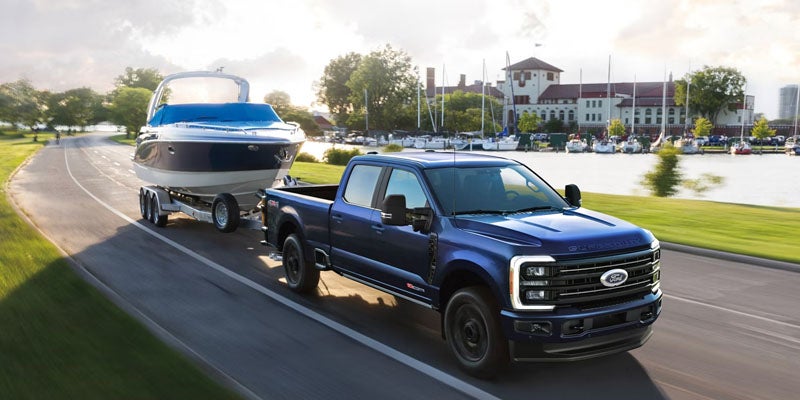
Ford F 150 and F 250 in plain language
Ford F 150 serves drivers who want one truck that feels at home on the highway, in town, and at the job site. Its lighter frame and suspension tuning make it easier to live with as a main vehicle, and its tow and payload ratings cover small to mid size travel trailers, boats, landscaping equipment, and home project loads. The cabin layout supports family use as well, with familiar seating, storage, and infotainment features that fit commuting and road trips.
Ford F 250 belongs to the Super Duty family, which brings stronger frames, higher tow ratings, and suspension setups intended to carry more weight. That extra strength changes how the truck behaves once you hook a larger trailer or load more cargo in the bed. Tow ratings that step beyond F 150 give room for heavier travel trailers, equipment trailers, and commercial loads that stretch light duty limits. At the same time, the truck feels more substantial in size, which is a benefit when traveling with weight and a factor to consider when driving and parking without it.
Looking at these trucks side by side through this lens makes tradeoffs easier to see. F 150 feels more nimble and easygoing as a daily driver, F 250 feels more planted with weight and brings more capability for demanding jobs and trips. Shoppers in Middle Tennessee who split their time between town roads, job sites, and highways can use this distinction to decide how much truck they truly want under them each day.
How towing and payload differences show up in real scenarios
Truck spec sheets list towing and payload numbers in pounds, but those numbers carry more meaning when tied to real situations. For a driver in Middle Tennessee who tows a small travel trailer or boat on weekends, F 150 often sits in the right zone. Its tow ratings cover lighter trailers while leaving room for gear and passengers, and its shorter wheelbase options help with maneuvering into campgrounds or ramps.
For trailers that move beyond that range, such as larger travel trailers, heavy equipment, or loaded car haulers, F 250 brings higher tow ratings and payload capacity that change what feels reasonable. The stronger rear axle, frame, and suspension take on tongue weight differently, and the truck’s braking and cooling systems are built with sustained load in mind. That difference matters in rolling Middle Tennessee terrain, where long grades, changing weather, and varying road surfaces can put more strain on a lightly matched truck.
Payload is just as important. A loaded bed with tools, materials, or cargo can eat into available trailer capacity when you use a light duty truck. F 250 gives more headroom by starting from a higher payload baseline, which means more trailer and cargo combinations stay within ratings. Talking through your likely trailer weight, bed loads, and passenger count with the dealership team helps you see where F 150 feels strong enough and where F 250 enters the conversation.
Everyday driving, comfort, and maneuverability
Capability is only one side of the truck decision. How the truck feels during normal driving around Middle Tennessee matters too. F 150 rides with a lighter stance when empty, which makes it feel more relaxed on daily commutes and errands. It threads through tighter parking lots more easily, and its turning circle helps in neighborhoods and older downtown areas.
F 250, as a Super Duty truck, feels larger and more substantial on the road. That extra size and stiffness pay off once you have weight behind or on the truck, but they also change how the truck feels when empty. Some drivers appreciate the sense of durability and presence. Others prefer the easier maneuvering of F 150 for their weekday driving and only step up when they know heavier towing is part of their near future.
When it makes sense to move from F 150 to F 250
Stepping up from F 150 to F 250 is more than chasing a larger number on a spec sheet. It is a decision about the kind of work and travel you expect the truck to handle, and how often those demands show up. If your plans center on moderate trailers, occasional heavy loads, and plenty of time driving with an empty bed, F 150’s balance of comfort and strength usually fits well.
If your plans include heavier trailers, frequent hauling, or growth into larger equipment over the next few years, F 250 becomes a strong candidate. Its tow ratings give more room for heavier trailers, and its payload headroom helps when the bed is full and the hitch is working hard. Choosing F 250 early can save you from outgrowing a truck too quickly, provided you are comfortable with the larger footprint during days when you are not towing or hauling.
The tension between capability and day to day comfort is real for truck buyers. Working through where your needs sit on that curve with someone who understands Ford trucks can keep you from stepping too far or stopping short. It turns the decision from a guess into a clear choice that reflects your week, your weekends, and your likely future plans.
How a local Ford dealership helps match truck choice to your plans
A comparison page can take you far, but sitting down with a team that works with these trucks every day adds another layer of clarity. At Reddick Brown Ford, conversations start with how you intend to use your truck. That means talking about routes you drive, loads you carry, trailers you plan to tow, and how often your truck will serve as the main family vehicle.
From there, trim levels, bed and cab configurations, axle ratios, and towing packages come into play. F 150 and F 250 both offer a range of setups that can either sharpen or soften their work focus. Working through those choices with guidance helps you find a truck that feels ready for the serious days without feeling out of place on the lighter ones. That is the goal for truck shoppers around Middle Tennessee who want their Ford to feel like the right partner across all of those moments.
What is the best light duty truck for daily driving?
Drivers who focus on daily commuting, errands, and lighter towing often prefer Ford F 150 and similar light duty trucks. They balance cabin comfort, maneuverability, and fuel use with enough strength for small trailers, home projects, and weekend trips.
Which trucks are best for both work and everyday driving?
Trucks that serve work and everyday driving well sit in the middle of the capability spectrum. Well equipped Ford F 150 models handle tools, materials, and moderate trailers without feeling out of place in town, while Ford F 250 steps in when job demands and trailer weights grow.
Best new trucks for heavy towing and daily driving?
Shoppers who plan to tow larger travel trailers or equipment on a regular basis tend to look at Ford Super Duty models, including F 250. These trucks bring stronger frames, higher tow ratings, and suspension tuning built for weight, while still offering trims aimed at long highway days.
Which pickup truck is best for towing a fifth wheel trailer?
Fifth wheel trailers introduce pin weight and size that suit Ford Super Duty trucks. F 250 and higher models deliver the payload, axle strength, and towing packages needed for that kind of trailer, plus factory fifth wheel prep and brake control features that keep the pairing under better control.
(Note: This article focuses on providing valuable information and does not mention specific pricing, for more information about financing and truck buying, please reach out to our dealership.)